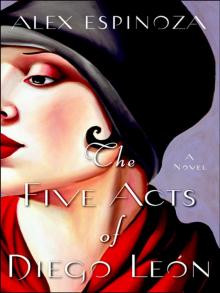
The sons of el rey, p.1
The Sons of El Rey, page 1
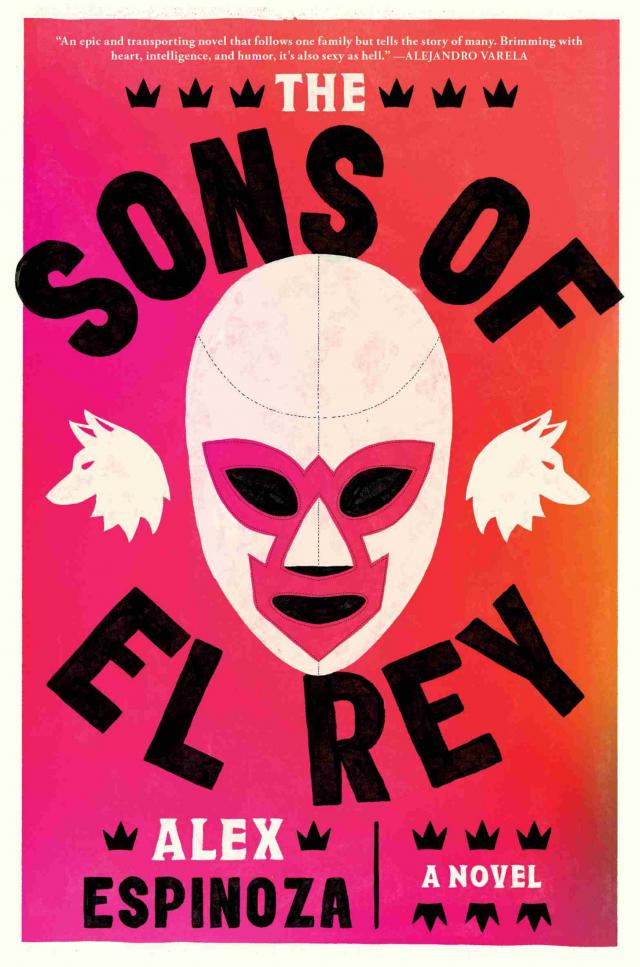


Thank you for downloading this Simon & Schuster ebook.
Get a FREE ebook when you join our mailing list. Plus, get updates on new releases, deals, recommended reads, and more from Simon & Schuster. Click below to sign up and see terms and conditions.
CLICK HERE TO SIGN UP
Already a subscriber? Provide your email again so we can register this ebook and send you more of what you like to read. You will continue to receive exclusive offers in your inbox.
For Kyle
Thank you for teaching me how to love with force and without regret.
I remain forever with you in this struggle.
In the ring, and even in the depths of their voluntary ignominy, wrestlers remain gods because they are, for a few moments, the key which opens Nature, the pure gesture which separates Good from Evil, and unveils the form of a Justice which is at last intelligible.
—ROLAND BARTHES
ERNESTO VEGA
A friend once told me the dead tell the best lies. I will try to be honest even though I never learned how.
No, I wasn’t born a luchador. I was shaped into one by circumstance, by a life lived without tenderness or sympathy, by my father’s beatings when I was a boy, his constant attempts to toughen me up, to make me a man. Un hombre valiente, he’d say. El Rey Coyote was my lucha libre persona. The long and flowing cape with its wide shoulder pads and furry collar, the spandex tights, the boots, and the mask, bright white fabric inlaid with thick gold borders outlining the eyes, nose, and mouth… it was an act and I got lost in it. I can’t be blamed, though. I only wanted to be seen and recognized. And I got my wish; all over Mexico, throngs of people packed those vast stadiums. They stood on their seats, raised their voices. They cheered for him, for me, and I was truly loved. But I didn’t choose to become El Rey Coyote. When I moved to Mexico City with my wife, he found me. We were destined for each other. Either good guy técnicos or bad boy rudos, we do it for la gloria, for the honor, for the sacrifice.
The punches to the stomach, the chest, the groin. The smacks on the back from an opponent or the mat as I leapt from the top cord, pivoting in the air, then falling so hard the sensation sent shocks like bursts of lightning from the base of my spine, up and down the column, from my fingers to my toes. The choke holds. Broken noses. Head injuries. Busted lips. Black eyes. Cracked fingers. Snapped wrists. Pulled tendons. Hands yanking my hair and twisting my arms. Legs wrapping around my neck, crushing my larynx, nearly suffocating me. Boot soles stomping my face. Scratch. Punch. Pound. Break. Blood running. Always the blood running.
Yes, the feuds are scripted, penned to hype up the drama, to get the audiences invested in our characters, to keep them coming back. And even though the fights are choreographed to avoid injuries, they still happen. Some think it’s all fake, but they’re wrong. You just need to look to our bodies for proof.
Like me, it was circumstance that led my son, Alfredo, to follow in my footsteps and become a luchador. Unlike me, it was his choice to do so. This was the 1980s, so all everyone talked about besides nuclear war with the Rusos was Satanic messages hidden in songs, cocaine, and teen suicide. After his mother died back when he was in high school, he started drinking, smoking mota, getting into car wrecks, and nearly killing himself.
Something needed to be done, so I got him into the ring and trained him in the tradition of lucha libre. That changed him, and he surpassed even my expectations. He followed in my footsteps, donned boots, tights, and a cape with bright colored stones. He covered his identity in a mask of shiny fabric adorned with jewels and beads, flashier than mine. As it is in our tradition, he took my name. Alfredo became El Rey Coyote Jr., the toughest luchador in all of Los Angeles. My grandson, Julián, was born to wage a different kind of battle, born to don a different type of mask.
I want to tell them I know how divine it can be, all that fame and adoration, all the ways they crave bodies like ours. But this can also ruin us, lead to our demise.
My children, Alfredo and Mercedes.
Julián.
Elena, my wife, my only real love.
Even him, that other me, El Rey Coyote.
I want them to know I understand now. I see what parts of us are forever lost in all this beautiful chaos. But I’m more dead than alive at this moment, so it’s too late for me anyway.
FREDDY VEGA
It was taken before I was born. He’s a different person from the old man currently dying inside a drab hospice room, eyes barely open, unable to speak. In this photo, my father defies gravity. Behind him there’s a truck; the sides are banged up and dented, the paint chipped. The bed’s stacked with bricks three and four high. He holds one in each hand, his fingers dusted with rust-red chalk. He’s growling, though my mom used to say he was laughing. To me, it’s a growl, and there’s a wild look in his eyes. He’s in the air, having leapt off the back of the truck. His knees are tucked against his chest. Whoever took the photograph managed to snap it at the right angle so that it looks like he’s suspended, not hurtling back down to the ground, but floating.
I’ve memorized every detail: his tights and white boots; the fabric of his cape billowing out behind him; the Bohemia beer sign hanging from the side of a crumbling building in downtown Mexico City; a little girl in a green coat darting across the street, blurred and ghostly. To my father’s right there’s a shadow stretching over the concrete sidewalk. It’s small, and anyone else would miss it because it looks like nothing more than a smudge, a flaw in the film. But it’s my mother’s frame. She’s pregnant with me.
In that moment, I’m just a shadow, something far away and distant.
I’ll have my own son one day; he’ll arrive on a rainy morning in February, his cries so loud they’ll drown out the thunder shaking the skies above us. We’ll give him my middle name, Julian, and I’ll try to be a good father just like his abuelo had been for me. But I’ll fail epically. I know he’s moved on, let the past be the past. I haven’t though; I’ve doomed us all. In that picture, my mother and I are incomplete, but my father’s not. He’s whole. There he is. Right there. This is the memory of him that I hold close to me, that I always have. Ernesto Vega leaping out of the bed of a truck, holding a brick in each hand.
For as long as I can remember it’s been nailed to the same spot on the wall inside the office, right next to the door leading out to the weight room, slightly crooked, the frame a dull silver. When I remove it, the color of the cheap wood paneling behind it is lighter, not dingy or sticky from grime like the rest of the room. A crooked screw pokes out from the surface. The frame falls apart; the glass tumbles to the ground and shatters. The shards cover the carpet so worn away in spots that it’s patched together with strips of electrical tape. That’s been the only thing holding this photo up all these years. A tiny nail. Thin as a baby bird’s bones. Thin and just as frail.
In the mid-1980s, when I was still in high school, my father left his factory job. He took all his money and rented out this space: a run-down, one-thousand-square-foot warehouse in an industrial area located on Mission between First and Meyers, east of the Los Angeles River bordering the railroad tracks. This was right after my mother died. I remember my sister, Mercy, and I thinking he was nuts. Maybe he was in shock? How could we convince him it was a bad idea, not worth the risk? But he converted this dilapidated place into something special. People from all over LA flocked here to work out, to spar in the ring, to train for weightlifting competitions. In the early ’90s, when that WWE shit became popular and they started running it every Saturday night on Channel 13, he decided to start offering classes in the art of lucha libre. He’d been a luchador in Mexico during the ’60s and ’70s. His name was El Rey Coyote, and he sported white tights, shiny lace-up boots with thick heels, and a long cape with a fur collar.
Then there was his máscara, the thing that gives every luchador their powers and abilities. Bright white with gold outlining his mouth, nose, and eyes, it fit over his face so tight it was a second layer of skin. He was a tried-and-true good guy técnico who traveled all over the republic battling rudos from Tijuana, Veracruz, and Monterey. He even held bouts in El Paso and San Diego, taught these gabacho wrestlers a thing or two, and starred in some low-budget films where he fought mobsters and space aliens. After high school, I joined the operation, working first as a trainer’s assistant, then, once I debuted as El Rey Coyote Jr., a bona fide lucha libre star and coach in my own right. But that was a lifetime ago. When I felt invincible. Like I could have it all. The overworked hospice nurses and the short doctor with the oily hair say there’s not much left to do to try saving him. All we can do is stand on the sideline and watch. Now, here inside the gym he founded, the place he fought so hard to keep, I feel him in every corner and cold pocket.
Bands of sunlight break through the plated windows facing the gravel parking lot. Like many small businesses, the lockdowns royally fucked us. And now that we’re past all that upheaval, I learn about the big-shot developer buying up properties around here. Little by little, the junkyards, auto detailing shops, and warehouses are being replaced by art galleries, trendy bars, and expensive lofts only guys in skinny jeans and handlebar mustaches and their hipster friends can afford. Even though we’re heading into summer and things are kicking up again, going back to something resembling normal, something resembling life before the entire coronavirus desmadre, our gym members have moved on, forgotten about us. These days it’s only the loyal clients who trickle in to lift weights or use the outdated treadmills that somehow stil l work. There hasn’t been a single new customer for as long as I can remember. All the others have just let their accounts lapse, so I’ve been forced to cancel them. Not much to do around here these days, so I’m using the downtime to organize, clear things out, and keep my head occupied so that I don’t go crazy thinking about my dad, about all the ways I’ve failed him. They’re saying it could be months or days until he passes. My wife, Grace, packed me a couple of sandwiches. I have a thermos full of café de olla, hot clove and cinnamon so strong it cuts through the smell of rubber and metal and the layers and layers of sweat and sacrifice this old gym still holds.
“I have some sick days,” Grace said to me this morning. “I’ll go down with you and help.” During the lockdowns, she got promoted to lead cashier because she was able to remain calm during all the chaos, her boss said.
“We can’t afford it. You go to work.”
“Okay.” She folded a damp dish towel and draped it over the edge of the sink. “I’ll call Julian. He doesn’t start teaching again until the end of the month, and you two need—”
“No,” I interrupted. “Just… let me do this.”
She turned, looked at me, brows glistening with sweat, the box fan on the dining table blowing strands of hair in her face. “Stop being such a damned macho. I’m calling him and that’s that.”
Terca. That’s the word my father would use to describe Grace. And my mother. Mujeres tercas. He’d throw his head back, laugh. They always keep us honest.
There’s so much here. Punching bags. Racks full of weights. Bench presses. The mats. Medicine balls. None of it being used. Everything silent and still. And then there’s this cramped office where my father managed the whole operation with the help of his buddy Hugo. The crazy dude with shrapnel in his leg courtesy of the Vietnam War. He always wore so much aftershave his fingers left everything perfumed, a lingering combination of flowers and baby powder. Hugo took a shot of tequila every morning and once stabbed a guy who was trying to rob a prostitute. He and my dad worked together for years—balancing books, filling out forms, renting out the ring, keeping careful track of everything. Once the news about the spread of the pandemic started hitting, Hugo was one of the first to pack all his shit up and head for the mountains, some secluded cabin in Big Bear. I haven’t heard from him since.
I’m determined to sort through all of it, trashing what’s no longer needed, keeping what calls to me. There’s a big metal desk in the office, its drawers crammed with receipts and ledgers, its surface scratched and scored. In the far corner, pushed up against the wood-paneled wall, is an old filing cabinet. Inside, more forms, more receipts, more invoices, more envelopes stuffed with letters and contracts, names and addresses of businesses we’d worked with, places that are permanently gone. It’s all suddenly lost its meaning. His life’s work no longer has a place. It doesn’t belong anywhere anymore. It’s just an inconvenience, and perhaps that’s the most tragic thing about all of this. I want to throw my hands up, say fuck it, torch the building, and call it a day.
But I can’t. I won’t.
Outside, a few garbage trucks and semis rumble down Mission. For a Monday, it should be busier. I should be seeing the short man on the corner of First setting up his little stand, firing up the burner where he cooks his famous breakfast burritos stuffed with scrambled eggs, chorizo, bacon, cheese, and huitlacoche. I should see the cooler wide open, the glass necks of Mexican Coke, orange Fanta, and the apple-flavored Sidral Julian used to love so much as a kid poking out from the ice.
Where did everyone go?
At around ten thirty, there comes the sound of a car approaching outside. A door slamming shut. Julian strolls through the front entrance. Baggy sweats. A dark hoodie. High-top Nikes unlaced. I remember what it was like for our family during the lockdowns, when we were forced to stay apart. He’d drive by the house and sit out on the porch, Grace and I talking to him through the dusty screen door. He started shaving his head when the barber shops closed, and now that they’re open, it looks like he’s not planning on growing his hair out. Stubble sprouts from his chin, along the edges of his sharp jawline.
“What’s up?” I toss the two trash bags full of old invoices and binders from the office by the door.
He shoves his car keys in his pocket. “Mom said you might need a hand.”
“I’m good. Don’t worry about it.”
He sighs. “Let me help.”
“No,” I insist. “You’ve got your own shit to deal with. This is something I gotta do. For your abuelo. He left me in charge.”
“Dad, come on. Don’t do this.” He takes a step forward.
To him, I’m being stubborn. To him, I’m playing the macho card, acting all tough. But if only he knew the truth, what it’s like right now. I’ve been defeated. Everything’s spiraling out of control. The depression I felt after his abuela died all those years ago has returned and is settling in, making itself real warm and cozy inside me. The thought of the sandwiches Grace packed turn my stomach. I can’t sleep. Even when I take the pills.
“Go on, Son.” I raise my voice, widen my stance. “It’s fine.”
He shakes his head, sighs, and mutters, “This is all so fucked up,” before turning around and taking off. I want to say I know it is. But why bother now?
As El Rey Coyote Jr., I was raised to fight. I carried on my father’s legacy, inside and outside the ring. But I failed. Because these things I can’t battle. All around me, the whole world has stopped fucking spinning and been turned upside down. And what’s left is the madness that silence brings. The absence of all these memories, of lives with nothing left, shouting in protest, resisting, refusing to go quietly.
JULIAN VEGA
He doesn’t think I get it, but I do. The men of my father’s generation aren’t the best communicators. They were taught to stay quiet, were raised on a crap ton of testosterone and aggression. Violence and poverty were their norm. Asking for help was seen as a sign of weakness. It’s all such macho bullshit, a total act that’s almost laughable. He’s always been bad, but he’s gotten worse since we’ve been forced to face the truth that Abuelo’s dying.
I race out of the gym’s parking lot, kicking up dust and gravel, my father’s silhouette moving back and forth inside the derelict building.
He doesn’t want my help? Fine. Fuck it.
* * *
They still make you put a mask on when you visit the hospice. They got signs up, too. Don’t enter if you have a fever or a cough. Wash your hands with soap and water for twenty seconds. Shit we already know, but I follow the rules. I need to be with my abuelito today.
Some think these places are depressing. Drab walls. Outdated furniture. Faded green carpet. Old people shoved inside tiny rooms that smell of stale pee and latex, all of them just waiting to die. Call me weird, but they’re anything but sad to me. It’s quiet in here, like a church.
Since they admitted Abuelo a few weeks ago, I’ve made it a habit to stop by on a regular basis, especially now that I’m between classes; I won’t start teaching summer school until later this month. Even though they’re both only basic English writing sections, I feel lucky to have nabbed the two classes. But the pay’s absolute shit, and I don’t know how far I can make my money stretch until fall without dipping into what little’s in my savings account. It’s June now, right before the official start of summer. I’ve got to make it to September somehow. Three damn months.
Graduate school didn’t prepare me for this kind of financial vulnerability.
Too much to think about right now, so I push it aside as I make my way down the hallway, past the front desk where an orderly in aqua-blue scrubs is talking to a nurse sporting a billowy smock.
“Good morning,” a male receptionist announces as I stroll by. His name tag reads Randy Bravo. He’s tall with smooth skin, cherry-red lips, firm thighs, and nice arms. Totally my type.
“Hey.” I raise an eyebrow, letting my gaze linger, placing my mask on after I’ve passed.