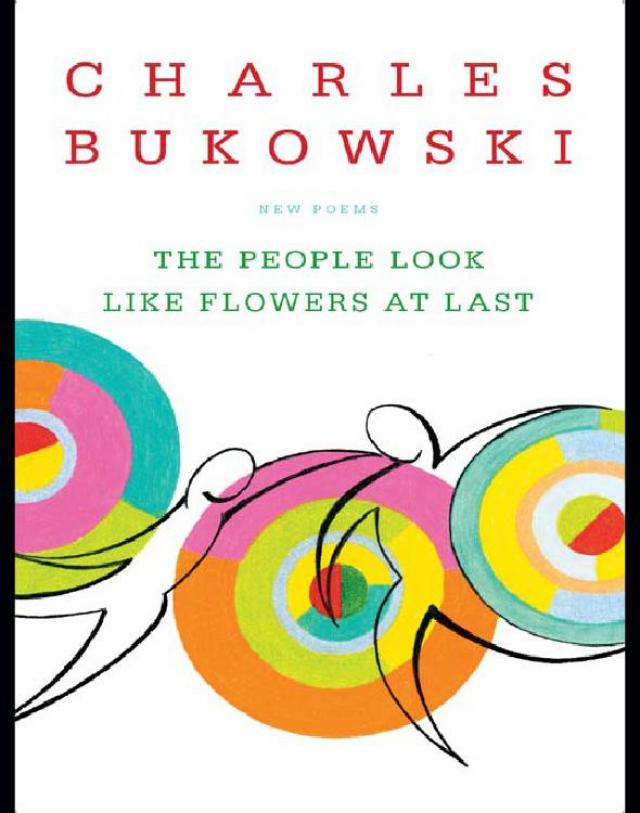
The People Look Like Flowers at Last: New Poems

The People Look Like Flowers at Last: New Poems

Charles Bukowski

Fiction / Contemporary / Poetry

“if you read this after I am dead It means I made it” -“The Creation Coffin” The People Look like Flowers at Last is the last of five collections of never-before published poetry from the late great Dirty Old Man, Charles Bukowski. In it, he speaks on topics ranging from horse racing to military elephants, lost love to the fear of death.  He writes extensively about writing, and about talking to people about writers such as Camus, Hemingway, and Stein.  He writes about war and fatherhood and cats and women. Free from the pressure to present a consistent persona, these poems present less of an aggressively disruptive character, and more a world-weary and empathetic person.
Read online
  • 249
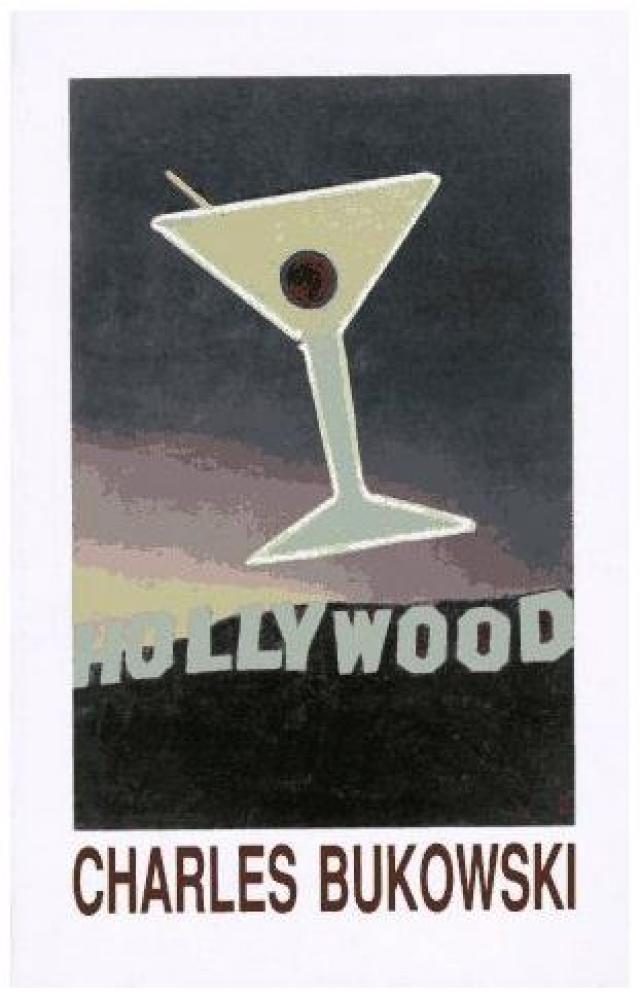
Hollywood

Hollywood

Charles Bukowski

Fiction / Contemporary / Poetry

There are many scandalous books about life in Hollywood, but none as poetic and dangerous as this, a fictional chronicle of Bukowski's experiences writing the screenplay for Barfly. Henry Chinaski has a penchant for booze, women and horse-racing. On his precarious journey from poet to screenwriter he encounters a host of well-known stars and lays bare the absurdity and egotism of the film industry. With unmatchable Bukowski verve, Hollywood is deadpan, touching and hilarious.
Read online
  • 186
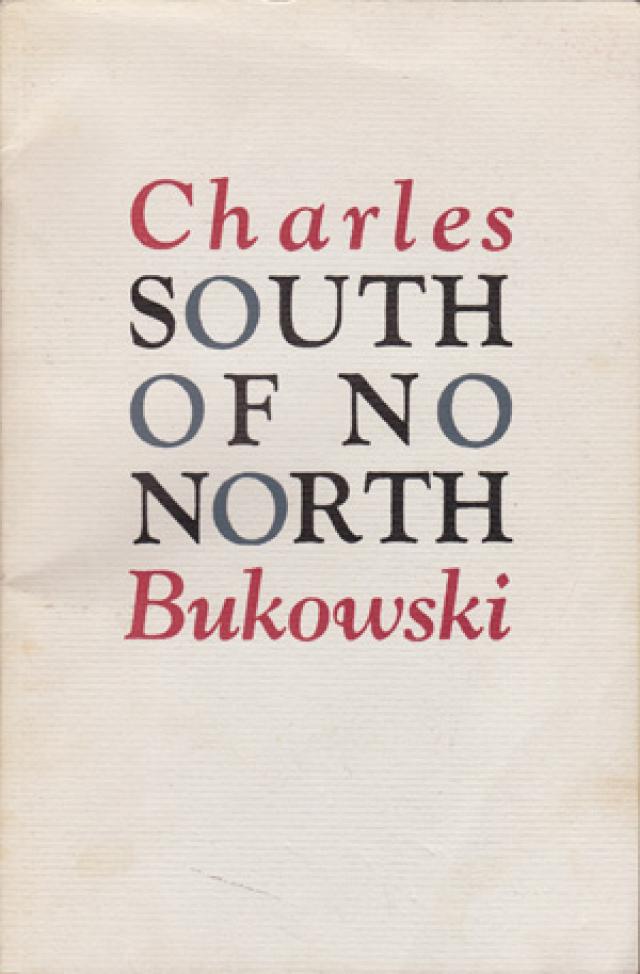
South of No North

South of No North

Charles Bukowski

Fiction / Contemporary / Poetry

South of No North contains some of Bukowski's best work. Among the short stories collected in the book are Love for $17.50, about a man named Robert whose infatuation with a mannequin in a junk shop leads him first to buy it, then make love to it, and then eventually fall in love with "her," much to the consternation of his real-life girlfriend; Maja Thurup, about a South American tribesman with an enormous penis who is brought to Los Angeles by the woman anthropologist who has "discovered" him and become his lover; and The Devil is Hot, about an encounter with Old Nick at an amusement pier in Santa Monica, where Scratch himself is caged and on display, fed only peanut butter and dogfood, exploited by a cynical carnie. The collection also features two of Bukowski's finest and most famous short stories: All the Assholes in the World Plus Mine, an autobiographical rumination on the treatment of his hemorrhoids, and Confessions of a Man Insane Enough to Live With Beasts. (The latter story originally was published as a chapbook of 500 copies by Bensenville Mimeo Press in 1965.) The short stories collected in the volume are evocative of Bukowski at his best, when he was one of the premier short story writers still at the top of his talent. - Wikipedia
Read online
  • 165
On Drinking

On Drinking

Charles Bukowski

Fiction / Contemporary / Poetry

The definitive collection of works on a subject that inspired and haunted Charles Bukowski for his entire life: alcohol Charles Bukowski turns to the bottle in this revelatory collection of poetry and prose that includes some of the writer's best and most lasting work. A self-proclaimed "dirty old man," Bukowski used alcohol as muse and as fuel, a conflicted relationship responsible for some of his darkest moments as well as some of his most joyful and inspired. In On Drinking, Bukowski expert Abel Debritto has collected the writer's most profound, funny, and memorable work on his ups and downs with the hard stuff—a topic that allowed Bukowski to explore some of life's most pressing questions. Through drink, Bukowski is able to be alone, to be with people, to be a poet, a lover, and a friend—though often at great cost. As Bukowski writes in a poem simply titled "Drinking,": "for me/it was or/is/a manner of/dying/with boots on/and...
Read online
  • 144
On Love

On Love

Charles Bukowski

Fiction / Contemporary / Poetry

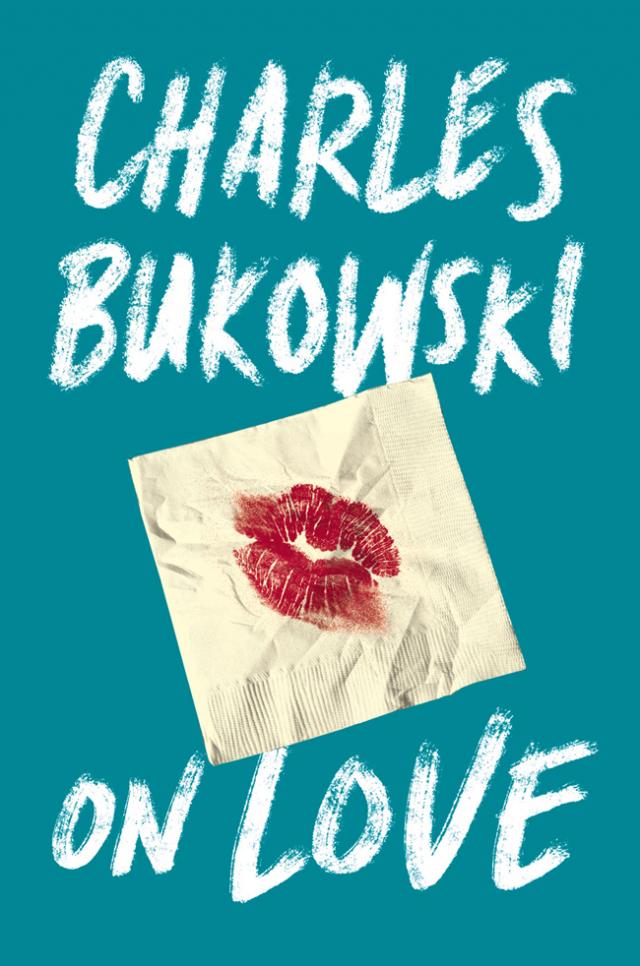
In On Love, we see Charles Bukowski reckoning with the complications of love and desire. Alternating between the tough and the tender, the romantic and the gritty, Bukowski exposes the myriad faces of love in the poems collected here - its selfishness and its narcissism, its randomness, its mystery and its misery, and, ultimately, its true joyfulness, endurance and redemptive power. Whether writing about his daughter, his lover, or his work, Bukowski is fiercely honest and reflective, using love as a prism to look at the world and to view his own vulnerable place in it. Memorably moving and, at times, hilarious, On Love reveals Bukowski at his most candid and affecting.
Read online
  • 66
Women

Women

Charles Bukowski

Fiction / Contemporary / Poetry

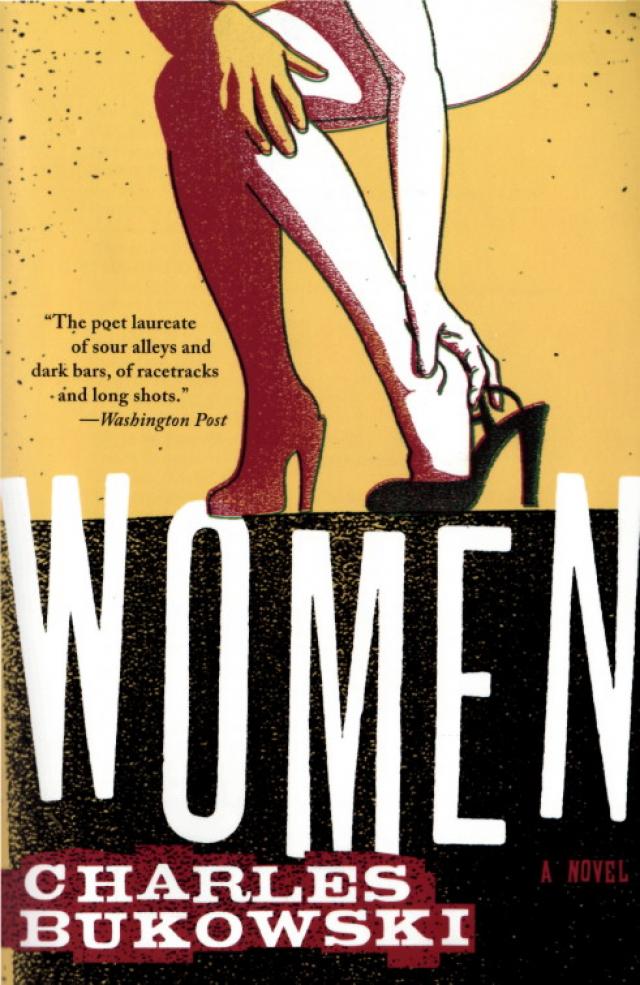
Low-life writer and unrepentant alcoholic Henry Chinaski was born to survive. After decades of slacking off at low-paying dead-end jobs, blowing his cash on booze and women, and scrimping by in flea-bitten apartments, Chinaski sees his poetic star rising at last. Now, at fifty, he is reveling in his sudden rock-star life, running three hundred hangovers a year, and maintaining a sex life that would cripple Casanova. With all of Bukowski's trademark humor and gritty, dark honesty, this 1978 follow-up to Post Office and Factotum is an uncompromising account of life on the edge.
Read online
  • 45
Ham On Rye

Ham On Rye

Charles Bukowski

Fiction / Contemporary / Poetry

"In what is widely hailed as the best of his many novels, Charles Bukowski details the long, lonely years of his own hardscrabble youth in the raw voice of alter ego Henry Chinaski. From a harrowingly cheerless childhood in Germany through acne-riddled high school years and his adolescent discoveries of alcohol, women, and the Los Angeles Public Library's collection of D. H. Lawrence, Ham on Rye offers a crude, brutal, and savagely funny portrait of an outcast's coming-of-age during the desperate days of the Great Depression."
Read online
  • 45
The Captain Is Out to Lunch

The Captain Is Out to Lunch

Charles Bukowski

Fiction / Contemporary / Poetry

"I am not in a contest. I never wanted fame or money. I wanted to get the word down the way I wanted it, that's all. And I had to get the words down or be overcome by something worse than death." So writes the late Charles Bukowski in his entry for 6/23/92 (12:34 AM). The Captain Is Out To Lunch And The Sailors Have Taken Over The Ship, a delightful, posthumous gathering of excerpts from Bukowski notebooks, is loaded with such direct ruminations about writing, death, money, humanity, and how the author located meaning and value in his daily life and work. Richly illustrated with gritty drawings by Robert Crumb, Bukowski's legions of readers will want to add this prose volume to their collections. Autograph seekers, race track habitués and the dull thud of the nags ("I go to the track almost reluctantly. I am too idiotic to figure out any other place to go...I guess getting my ass out of here forces me to look at Humanity and when you look at Humanity you've GOT to react." p.66), Hollywood types, classical music and classy authors, poets and poseurs, all subjects frequently addressed by Bukowski over the course of his long, productive career, shape the book's contents. One observes Bukowski at home, going to the mall with wife Linda, driving the LA freeways, at his computer mulling over what does and doesn't add up. Charles Bukowski scrapped and fought for his rewards and, as "The Captain Is Out To Lunch" makes indelibly clear, it was honest writing and its publication, not money or fame, that empowered him. Ultimately he achieved acclaim and a fair measure of financial success, after establishing a beneficial relationship with John Martin of Black Sparrow Press, a committed independent publisher who enabled him to reach a world-wide audience of readers. They valued his work during his lifetime and continue to anticipate the thinning stream of books still coming out several years after his death.
Read online
  • 42
The Most Beautiful Woman in Town

The Most Beautiful Woman in Town

Charles Bukowski

Fiction / Contemporary / Poetry

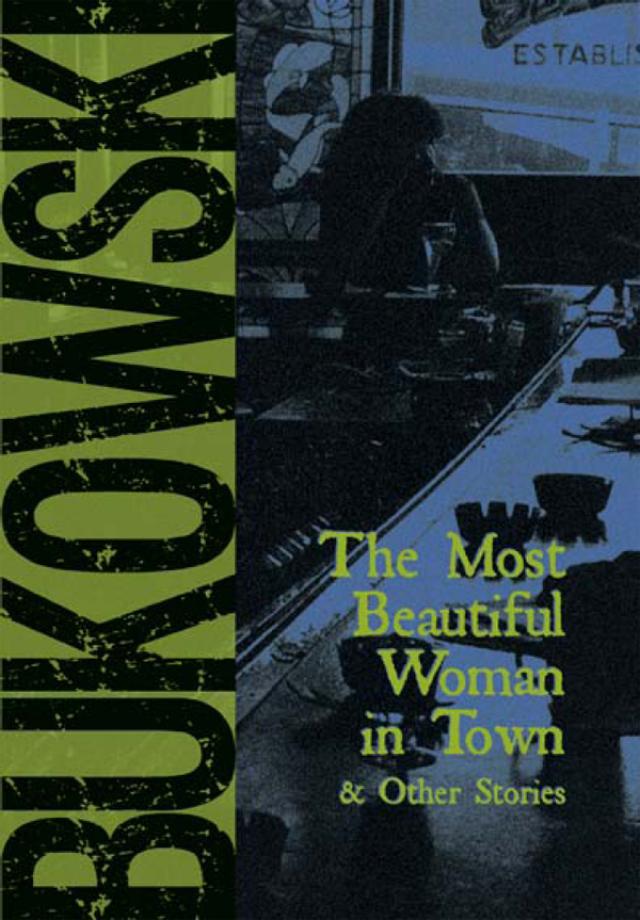
These mad immortal stories, now surfaced from the literary underground, have addicted legions of American readers, even though the high literary establishment continues to ignore them. In Europe, however (particularly in Germany, Italy, and France where he is published by the great publishing houses), he is critically recognized as one of America's greatest living realist writers.Charles Bukowski was born in Andernach, Germany in 1920 and brought to America at the age of two. Eighteen or twenty books of prose and poetry, Bukowski, after publishing prose in Story and Portfolio, stopped writing for ten years. He arrived in the charity ward of the Los Angeles County General Hospital, hemorrhaging as a climax to a ten year drinking bout. Some say he didn't die. After leaving the hospital he got a typewriter and began writing again—this time, poetry. He later returned to prose and gained some fame with his column, Notes of a Dirty Old Man. After 14 years in the Post Office he resigned at age 50, he says, to keep from going insane. He now claims to be unemployable and eats typewriter ribbons.
Read online
  • 36
183