Eddy eddy, p.1
Eddy, Eddy, page 1


First published in 2022
Text © Kate De Goldi, 2022
All rights reserved. No part of this book may be reproduced or transmitted in any form or by any means, electronic or mechanical, including photocopying, recording or by any information storage and retrieval system, without prior permission in writing from the publisher.
Lines quoted on pages 45, 48, 50, 60 and 130–131 are from Murder in the Cathedral in The Complete Poems and Plays © T.S. Eliot, published by Faber and Faber Ltd. Reproduced with kind permission of Faber and Faber Ltd.
Lyrics quoted on page 185 are from the song ‘Careless Love’. Words and music by John Maybury and Angelo Badalamenti © Anlon-Music Co, Universal Music Cor, Universal/MCA Music Publishing Pty. Ltd. All rights reserved. International copyright secured. Reprinted with permission.
Every effort has been made to trace copyright holders and to obtain their permission for the use of copyright material. The publisher apologises for any errors or omissions and would be grateful if notified of any corrections that should be incorporated in future reprints or editions of this book.
Allen & Unwin
Level 2, 10 College Hill, Freemans Bay
Auckland 1011, New Zealand
Phone: (64 9) 377 3800
Email: auckland@allenandunwin.com
Web: www.allenandunwin.co.nz
83 Alexander Street
Crows Nest NSW 2065, Australia
Phone: (61 2) 8425 0100
A catalogue record for this book is available from the National Library of New Zealand.
ISBN 978 1 98854 715 2
eISBN 978 1 76106 471 5
Text design by Saskia Nicol
Author photograph here by Bruce Foster
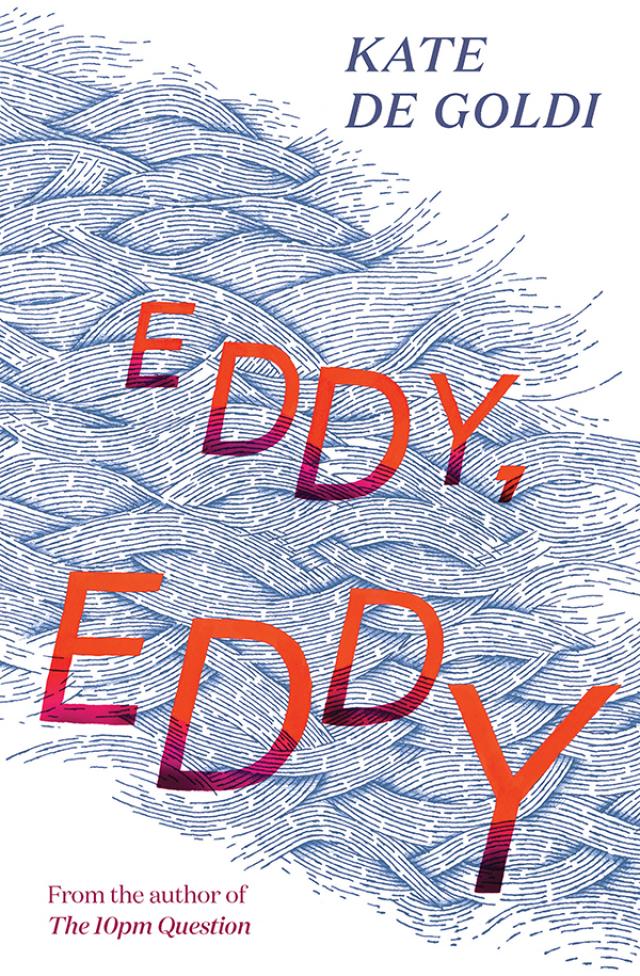
Cover design & illustration by Sarah Maxey
For Sally Zwartz.
And in memory of Jenny & Fra,
who gave us the books and the songs.
Marley was dead: to begin with. There was no doubt whatever about that. The register of his burial was signed by the clergyman, the clerk, the undertaker, and the chief mourner. Scrooge signed it; and Scrooge’s name was good upon ’change, for anything he chose to put his hand to. Old Marley was as dead as a door-nail.
— FROM A CHRISTMAS CAROL BY CHARLES DICKENS
CONTENTS
COVER PAGE
TITLE PAGE
COPYRIGHT PAGE
DEDICATION
EPIGRAPH
CONTENTS
SEPTEMBER
1
2
3
4
5
6
7
8
OCTOBER
1
2
3
4
5
6
7
BOO
NOVEMBER
1
2
3
4
5
BOO
6
DECEMBER: FIRST WEEK OF ADVENT
1
2
3
BOO
4
5
6
BOO
DECEMBER: SECOND WEEK OF ADVENT
1
2
3
BOO
4
5
6
7
8
BOO
DECEMBER: THIRD WEEK OF ADVENT
1
2
3
4
5
6
7
8
BOO
JANUARY: FA-LA-LAH
1
2
3
4
5
6
BOO
7
8
9
10
11
12
13
BOO
ACKNOWLEDGEMENTS
ABOUT THE AUTHOR
SEPTEMBER
1
‘Marley was dead: to begin with. There was no doubt whatsoever about that.’
Eddy’s uncle got to the immortal words first. It was a quotation begging to be said that day. One of them had to say it, Eddy supposed. Brain grabbed the moment.
Funny really, since Brain was a slow thinker and mover most of the time. But he spoke the second they settled into the car. Then he shut the passenger door softly — a full stop. Brain did most things carefully, even delicately. This sometimes made Eddy itch.
Maybe he’d been waiting years to say it. Maybe, all that time ago, he’d named Marley just so he could say the line when Marley died. Only now he said it wrong.
‘No doubt whatever,’ said Eddy. Really, for a research librarian, Brain could be surprisingly imprecise. He often fluffed song lyrics and quotes. ‘No “so”.’
‘Are you sure?’
‘Positive.’
Brain looked at Eddy: his baffled-animal look, the raccoon eyebrows bending inward. He seemed to be staring at Eddy’s forehead as if trying to make out the words, etched there or something, proof.
‘Marley was dead:’ Eddy paused.
‘Colon,’ said Brain, with a wan smile.
‘Marley was dead colon: to begin with. There was no doubt whatever about that.’
There really wasn’t any doubt. Marley was in the back seat, head resting on her old pillow with its stains and holes and sprouting kapok. She was wrapped in the Kaiapoi Pure Wool blanket. The blanket was Eddy’s sole inheritance from his unknown maternal grandmother. He’d donated it to Marley when she was a pup and it had been her bed rug for as long as anyone could remember. It was all felted up from years of washing, spattered with ragged holes from Marley’s unclipped claws. She liked to rough up the rug before she slept; she pawed at it, bunched it into little hillocks then thumped down onto it exhaling noisily, her long nose between front paws.
‘Memories of snow,’ Brain told Eddy all those years ago. ‘The reptilian brain remembering Labrador — you know, all the snow, how they paw up the snow for warmth.
‘Labrador. Where Labs come from,’ said Brain, unnecessarily. Every moment a teaching moment. Labrador habits. Dreamtime lore. The Jesuits’ misdeeds in China. Lines of poetry — misquoted probably, now that Eddy thought about it. The arguments for and against veganism. The meaning of thanatology … It had been all right when he was young, Eddy supposed. He couldn’t stand it these days.
Marley’s old rug would go with her now, into the ground beneath the wattle in the backyard, where she had lain in the shade all the hot afternoons of Eddy’s life.
He’d already prepared the hole, spent half the morning marking out the plot and digging, manufacturing a decent sweat. It was sweltering by 11 a.m., a breathless, pressing heat, though it was only September. Eddy had derived a grim enjoyment from the liquid gathering under his cap, leaking unpleasantly down his neck and back. He imagined it glistening in the sun, a moist and manly rebuke to Brain. One of them was practical, the sweat said. One of them had borrowed the spade from next door and prepared the grave.
Not that Brain had been watching. He was inside with Marley, contemplating the animal soul. Saying a prayer, no doubt.
In the car now Brain still stared, dwelling on the quotation, listening to it in his head. Everything in Brain’s head happened at adagio.
‘Marley was dead: to begin with,’ he said again. ‘There was no doubt whatever about that.’
Eddy had been there at the death. Brain too, but only Eddy watched. Brain laid a big white hand on Marley’s flank but stared fixedly at the poster on the otherwise bare clinic wall: an image of a gadfly petrel, aslant against a blue sky.
Eddy held Marley’s shabby left forepaw. It had given her gyp for years; she couldn’t manage a run longer than three ks without developing a limp — a Marley limp, graceful and apologetic. He massaged the furless patch on the side of the paw with his thumb. He watched Marley’s face, the grizzled muzzle all slack now, her lovely eyes gummy with sickness.
At the same time, from the corner of his eye, he watched the vet expertly filling the syringe.
‘It’s very quick,’ the vet said. ‘And completely painless.’ Eddy doubted the vet knew this for sure, not being a dog. It was Fat Vet. He was in practice with his brother Thin Vet: Fat Bob and Thin Tim.
Yeah, but shut up, Fat Vet, Eddy thought. Don’t talk.
He liked Fat Vet well enough. He liked him much better than Thin Vet, who was terse and kind of bitter. But Eddy didn’t want Fat Vet talking, not while Marley was getting the needle. He wanted it just to be Marley’s sounds, her little snuffles and wheezy exhalations, the occasional tail thwomp, pathetically tired. He wanted to hear her breathing right to the end.
Fat Vet obliged. He said nothing more. He felt around with his competent sausage fingers for the soft gap in Marley’s neck and slid the needle neatly into the cavity, and Marley was as dead as a door-nail. In less than a minute. No doubt whatever.
‘Except,’ said Eddy now, ‘it isn’t “to begin” with. It’s the end. The end of an era. The Marley Era. Marley was dead. Full stop. The End.’
He started the car and pulled out into the road, pitted and hummocky like so many of the roads in the area; even at normal speed the going was bumpy. Today the traffic ambled, befuddled by the heat. The air was hazy, filled with spores. This city is comatose, thought Eddy. He imagined flooring it, frightening all the dozy motorists, driving somewhere at great speed. He pictured the long straight roads north of town, t he magical vanishing point. But really, you couldn’t floor a Suzuki Alto with any conviction.
‘Marley was dead to end with,’ said Brain, trying it out.
Eddy felt the familiar spike of irritation with his duffer uncle, with Brain’s over-deliberate enunciation, his ponderous — as he called them — cerebrations. He felt the evil little urge that visited him sometimes, to pinch Brain some place painful.
‘To begin with is better,’ said Brain, oblivious. ‘God closes a door, opens a window.’
If he closed his eyes, thought Eddy, they might end up in the river, sink into the silted-up bottom, let the water close over the Suzuki Alto, their banana-coloured coffin, Amen, Amen.
‘Lift up your heads, oh ye gates!’ sang Brain through the windscreen, into the suburban middle-distance.
2
The month of Marley’s death was the two-year anniversary of the first earthquake. Which meant it was exactly two years since the death of Brain’s mother. She had probably died during the long shaking, though no one could say for sure. Bad heart. They had found Doris in her narrow bed when they went around to check on her, an hour after the quake. Could have gone at any time, the doctor said. It might have been the quake.
‘Frightened to death,’ said Brain mournfully, but Eddy doubted it. Doris was quite the termagant. Mostly, people were frightened of her. He had frequently witnessed her admonishing tradies and shop assistants, hapless passers-by. In church she recited the prayers at an uncomfortable volume, in competition with the rest of the congregation. Once, she had barked out her disagreement during the sermon. Heads had turned, but the priest ploughed serenely on, used to Doris, no doubt. Eddy, ten years old at the time, had gone hot and horrified. He refused ever to accompany his grandmother to Mass again.
This weekend, Brain had arranged for the Modern Priest to say an anniversary Mass for the repose of Doris’s seized-up little soul. In their living room, on a Saturday evening. The Modern Priest loved a house Mass; he grieved for the 1970s when everyone and their aunt apparently took up home-style worship.
‘Count me out,’ said Eddy, even as he automatically helped Brain push the couch across the room to make space for the temporary altar trestle. Eddy had not been to a church since the quakes and before that he’d gone solely to sing in the Cathedral choir. The choir loft was sufficiently far away from the priest and the progress of the Mass to make it feel you were uninvolved, practically elsewhere, which suited Eddy fine.
He’d finally let his friend Thomas More talk him into the choir. Thos More was an inconsistent theist, but he had unshakeable faith in music of all kinds and the glory of voices raised in chorus. Eddy had resisted joining because Brain was the deputy choir master, but Thos More worked on him, wore him down like a faltering surface under a power drill.
In fact, Eddy loved singing just as much as Thos. He loved singing with Thos. They’d been in every school choir together since primary school, had formed countless short-lived bands, all with satisfyingly abstruse names. Their last band (Steal Away) had been barely a band: just the two of them, harmonising Thos More’s increasingly strange secular spirituals: Thos liked a paradox.
‘Ginge will be here,’ said Brain. He smoothed the woven table runner carefully across the table top.
Eddy was very fond of cousin Ginge, a bachelor like Brain, with a houseful of cats (last count, six) instead of a nephew. Cat-love on Ginge’s scale was possibly pathological but Eddy approved of it: if not for Ginge’s interventions, the moggies were destined for the prick in the paw. Ginge was a union organiser and sometimes as dufferish as Brain, but he was a committed communist, and very droll. Also an atheist, though — more paradox — he went often to Mass: in his ancient army coat and Doc Martens — for old times’ sake, he said. If you considered Brain and Ginge with a cool eye you could not fail to conclude that the Smallbone genetic make-up was peculiar. And coming to an end. Any reproductive glory was up to Eddy.
‘Bridgie’s coming too,’ said Brain. He placed the pottery candlesticks at either end of the trestle. Next, he would get the oval Temuka pottery bowl for a makeshift chalice. Eddy just knew Brain was imagining himself as an early Christian preparing for the Eucharist in a Roman atrium.
Well, Bridgie. Bridgie was wild. She was Eddy’s godmother, though she believed neither in God nor mothering. She taught piano and viola and played in the symphony orchestra, had in fact played in two of his and Thos More’s five-minute bands. Bridgie dressed extravagantly and pursued a dangerous line in conversation. She sometimes enquired after Ginge and Brain’s peckers: had they shrivelled and fallen off yet, due to long-term lack of use?
The quartet’s friendship was a mystery to Eddy, but they went way back. Back through the mists of time to Our Lady of Perpetual Succour, their hallowed primary school where fragrant and beautiful nuns had cast an unfathomable spell, and when the Modern Priest (chief altar boy) had answered to the name Christopher Mangan. They had all regularly played at Masses in Chris Mangan’s bedroom, and in Eddy’s view, they were playing still.
‘When I was a child, I spake as a child,’ said Eddy, watching Brain fold the lily-white table napkin he kept especially as a purificator to wash out the pottery chalice. Brain was pretending he hadn’t heard.
‘But when I became a man, I put away childish things.’
‘King James?’ said Brain.
Eddy pretended he hadn’t heard. They sometimes did this. It was 1.50 p.m. He had a pick-up in forty minutes.
‘I’m off,’ he said.
3
He walked to Paparoa Street, a zigzag route that dodged the worst of St Albans’ chewed-up footpaths. He had a bike, but lately a disturbing thing happened whenever he swung his leg over. Slowly, terribly, he felt himself turning into Brain. He felt his arse spread and his fingers plump up. His scalp itched as his hairline seemed to recede. The pedals moved as if through porridge. He could have cycled naked but still it would have felt like he was wearing a navy blazer, wheat-coloured corduroys and polished brogues.
This sort of horror had happened at intervals throughout his adolescence, especially once his voice had broken and settled in the same baritone range as Brain’s. Eddy had been violently alarmed by the first of these episodes, bursting from Thos More’s sleekly appointed sleep-out into a cold June night, his breaths short and his scalp prickling on the inside.
Wtf? said Thos More by way of his eyebrow, when Eddy finally came back inside. Had he sounded like Brain? asked Eddy. Thos thought about it. ‘No more than usual,’ he concluded. Eddy was appalled. ‘It’s the vocabulary,’ said Thos. ‘How many fourteen-year-olds say concatenation? And, you know, the sound — same timbre as Brain’s.’ Thanks for nothing, thought Eddy. And btw, how many fourteen-year-olds said timbre?
He’d tried to keep watch on vocabulary after that, suppressing Brain-type words. Interstices. Adumbrate. Desuetude. He would lead a two-syllable life. He tried to speak in less well-formed sentences, too, use a basser voice. It was hopeless, of course. He’d been a sitting duck: fourteen years with Brain was a full-scale colonisation. He would never escape his uncle’s words, his grammar and tone, his cerebrations. Occasionally Brain’s voice even narrated passages inside his head while he was reading. Did this happen to everyone at some stage — their parents or caregivers taking up passive-aggressive occupation inside them, a desperate stakeout just before their offspring left forever?
Not that Eddy was leaving any time soon. The quakes had seen to that. The city’s housing stock was gutted. Rentals were thin on the ground or beyond his pocket. But also, in his many interior fantasies of Moving Day, there appeared always a reduced and stoical Brain helping him lug furniture, pressing household linen and appliances on him, waving a brave farewell from the front porch. Eddy couldn’t do it to him. He might just have done it while Marley was still alive — he could have trusted Brain to Marley’s care. But that ship had sailed.
As it was, on most days they were both engaged in elaborate delaying tactics re arrival home from their respective jobs. It was the silence that came down the path to greet you, the lack of hustle and operatic whimpering. And being alone in the house. Nothing, nowhere, felt as it should. No dribbling dog-love when Eddy slumped on the couch. No slavish companion padding alongside him down the hallway or curled like a conch beside his bed. He didn’t like going to the fridge or the pantry, the dog roll and the half-full bag of Eukanuba staring back at him, all sad and unemployed. He meant to take them next door for Pluto the Maltese but somehow never got round to it.